
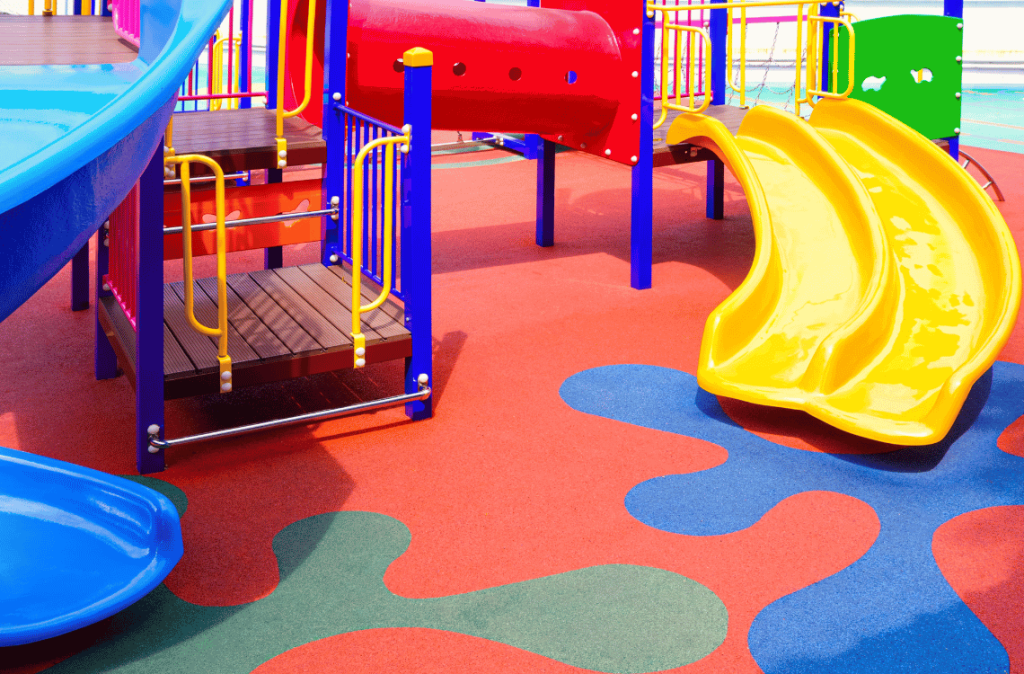
If you’ve tried bringing your little one to a neighbourhood park lately, you might have noticed a curious phenomenon: it’s either under renovation for the next seven years, mysteriously removed, or swallowed up by a shiny new development.
Public play spaces, once the default backdrop of childhood, are slowly vanishing. In their place? Air-conditioned indoor playgrounds with ticket prices that make you question your life choices.
It raises a big question: if play now comes with an entrance fee, what does that mean for families? And more importantly, is this shift good, bad, or simply a sign of the world we’re raising our children in?
The Cost of “Convenient” Childhoods


Indoor playgrounds are undeniably convenient. They are clean, padded, safe, and—let’s be honest—wonderfully air-conditioned. No mosquitoes, no mysterious puddles, no need to slather your child in sunblock thick enough to ice a cake.
But that convenience has a cost. Literally.
Once upon a time, play was free. Your child could run, climb, and scream at the top of their lungs without you needing to tap your card.
Now, a two-hour session in some indoor playgrounds can cost as much as a family meal. Multiply that by a few weekends, and suddenly you’re spending more on slides and ball pits than on groceries.
The bigger concern is this: are we normalising the idea that play belongs behind a paywall? Childhood shouldn’t feel like a subscription service.
Why Public Playgrounds Still Matter
There’s a reason many of us feel nostalgic when we see the old-school playgrounds of our childhood.
The metal slides that were scorching by noon, the tyre swings that looked like they might fling you into orbit, the sand pits that may or may not have been 50% sand. They weren’t perfect, but they meant something.
Public playgrounds give children:
- A chance to play without financial barriers
- More diverse experiences (weather, textures, mixed-age interactions)
- Real-world social skills developed by playing with whoever happens to be there
These are things an indoor mall playground can’t fully replicate. Outside spaces teach resilience—like learning that sometimes the slide is wet because it just rained, and life goes on.
They teach creativity—sticks become magic wands, leaves become currency, stones become secret treasure.
Take away these raw, unpredictable elements, and we risk raising children who can only play in curated, sanitised environments.
The Pressure to “Pay to Play”

Parents today already juggle so much: rising costs, demanding work schedules, enrichment classes, and the constant pressure to “get it right”.
When public parks shrink and paid indoor spaces become the norm, it adds yet another layer of expectation.
You end up feeling guilty when you don’t want to fork out for a play session. You wonder if your child is missing out.
You worry you’re being stingy. Never mind that your own childhood joy came from climbing a tree outside your block for free.
Indoor playgrounds are great once in a while. The problem starts when they begin to feel like the only option.
When Malls Become the New Neighbourhood
There’s something almost poetic about it: once, we asked our friends, “Meet at the void deck?” Now our kids will probably say, “Meet at Level 3, next to the café with the giant plastic ice cream?”
Shopping malls have slowly become the default gathering place for families. It’s the one place where no one complains about the heat, the humidity, or the sudden downpour.
But when childhood is confined to four walls and artificial turf, kids miss the spontaneity that outdoor spaces offer.
They begin to associate play with consumption—buying a drink, grabbing a snack, paying for a session, maybe even renting a birthday room. Play becomes part of the mall economy rather than a natural part of their environment.
If neighbourhood interaction only happens in commercial spaces, what happens to community spirit? To chance encounters? To the freedom of bumping into familiar faces at the same playground week after week?
What Parents Can Do

Here’s the good news: even with parks disappearing, families still have options. And no, they don’t all involve opening your wallet.
A few helpful strategies include:
- Choosing neighbourhoods or routes with remaining parks and making them part of your child’s routine
- Taking advantage of public green spaces like nature reserves, waterfronts, and botanic gardens
- Organising tiny “pop-up playdates” outdoors, even if it’s on a patch of grass near your block
- Swapping one paid indoor activity a month for a free nature outing
Public spaces may be shrinking, but they haven’t vanished entirely. Sometimes it just takes a little intention to reclaim them.
What This All Says About Us
Let’s be honest: the shift from outdoor parks to indoor playgrounds isn’t simply about disappearing land. It reflects a cultural change.
Our lives have become more structured, more scheduled, more controlled. We’re not just managing our kids—we’re managing the environment they grow up in.
We prefer safety over spontaneity. Predictability over chaos. Air-con over sweat. And who can blame us?
But perhaps the loss of public parks is a reminder that childhood shouldn’t be too curated. Kids need a bit of messiness in their lives. A scraped knee. A muddy shoe. A chase through an open space with no fences and no time limits.
These experiences build not just memories, but resilience, imagination and confidence.
Reclaiming Childhood, One Park at a Time

The disappearance of playgrounds isn’t just an urban planning issue—it’s a childhood issue. If we allow play to become a commodity, accessible only through entry tickets and weekend bookings, we risk raising children who think joy must be purchased.
Indoor playgrounds will always have their place. They are fun, clean, and convenient. But they should complement childhood, not define it.
So the next time you pass by a patch of open grass, a small neighbourhood park, or even a quiet corner under a tree, consider stopping for a moment. Let your child run. Let them explore. Let them play freely.
In a world where paid entertainment is everywhere, free play might just be the most precious thing left.
Disclaimer: The information provided in this article is for informational purposes only and should not be considered as medical advice from Motherhood.sg. For any health-related concerns, it is advisable to consult with a qualified healthcare professional or medical practitioner.
For more insightful stories and parenting advice, stay tuned to Motherhood.sg!