
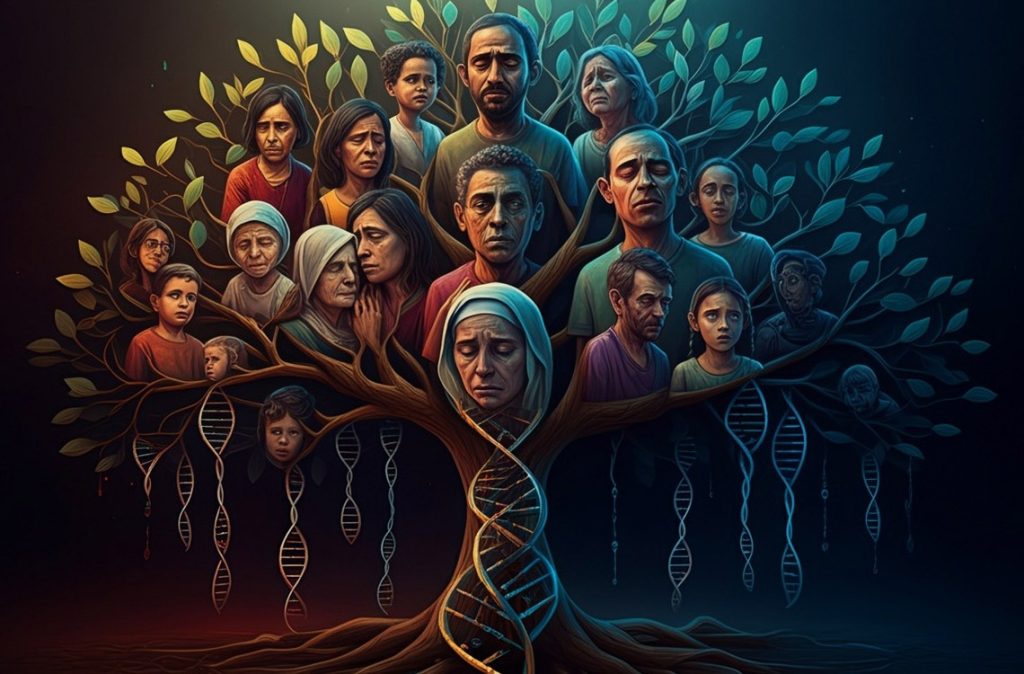
You don’t have to live through war, famine, or personal tragedy to feel the echoes of it.
Sometimes, children carry the weight of traumatic events their parents or grandparents went through—even if they weren’t there when it happened.
This isn’t mumbo-jumbo. Trauma can travel through families and even through the generations.
The same way we pass on our genes to our kids, so too can we pass on the genetic trauma of our ancestors to our descendants.
Here’s what you need to know about intergenerational trauma (and how it can affect your kids).
How Trauma Moves Between Generations


Researchers say there are three main ways trauma travels.
It’s a mix of biology, behaviour and environment that shapes how children respond to stress, how safe they feel, and how they connect to the world.
-
Biological – If a mother is very stressed during pregnancy, some of that stress may be passed on to her baby through changes in the body.
-
Behavioural – Parents dealing with their own trauma may be more anxious, distant, or reactive, which affects how they parent and how children learn to cope.
-
Social and environmental – Poverty, discrimination, or being displaced can shape family life and keep old wounds alive.
Most of the time, these factors work together, which is why trauma can feel like it’s “built in” to a family.
You will tend to see this kind of intergenerational trauma repeating itself through multiple generations.
If a mother is an alcoholic, the chances of all or some of her children having substance abuse issues are also very likely.
In some cases, even adopted children who grew up in otherwise healthy households can inherit the habits and toxic patterns of their biological parents.
The Biology Side

Trauma does not only live in memories or emotions; it can also leave biological traces that influence the next generation.
Research on intergenerational trauma shows that when a parent experiences severe stress, abuse, or loss, the body’s stress-response systems can adapt in ways that affect their children.
For example, studies of children of Holocaust survivors and war veterans suggest differences in cortisol regulation, the hormone that governs stress response, which may make children more sensitive to stress even if they never directly lived the trauma.
This biological handoff does not doom a child to repeat a parent’s suffering, but it does mean trauma can echo through generations in ways that are both subtle and profound.
Behaviour and Family Stories

Biology doesn’t act alone. A parent struggling with untreated trauma may find it hard to be emotionally present or calm.
Children pick up on that and may learn survival strategies that don’t always fit everyday life.
Family stories also matter. When loss, danger, or hardship become part of the family narrative, those stories shape identity and how safe children feel in the world.
Parents who suffer from PTSD or depression may cause greater distress in their kids, showing that parental mental health directly affects children.
Stress During Pregnancy

Pregnancy is another sensitive time.
Studies show that mothers who experience high stress or anxiety during pregnancy are more likely to have children with behavioural challenges, like irritability or difficulty managing emotions.
This doesn’t mean stress dooms a child’s future.
But it highlights why caring for pregnant people matters—not just for their own health but for future generations too.
Why It’s Not Destiny

Hearing that trauma can be passed down might sound scary, like it’s unavoidable. But that’s not true.
The effects are often small, and they can be reduced or even reversed with support, care, and safe environments.
Many families with a history of trauma show incredible resilience.
Even animal studies show that some of the biological changes linked to stress can be shifted later in life. That’s a hopeful sign that change is possible.
How to Break the Cycle

Because trauma spreads through behavior and environment, those are also the places we can step in.
- Parenting support programmes can help carers learn new ways to cope.
- Mental health care for parents reduces the chance of passing stress down.
- Community support and safe cultural spaces help families heal.
- Financial stability and childcare give parents breathing room to show up for their kids.
Research shows these steps can improve parenting and children’s wellbeing. The key is giving families the tools and support they need.
The Bigger Picture

Talking about inherited trauma isn’t about blaming parents. It’s about recognising patterns so we can change them.
The hopeful part of this science is that it gives us clear action steps: supporting pregnant women, making mental health care accessible, reducing family stress, and creating new, healing family stories.
We can’t erase the past. But we can make sure it doesn’t quietly shape who our children become.
If the next generation is going to inherit something, let it be strength, safety, and resilience.
Disclaimer: The information provided in this article is for informational purposes only and should not be considered as medical advice from Motherhood.sg. For any health-related concerns, it is advisable to consult with a qualified healthcare professional or medical practitioner.
For more insightful stories and parenting advice, stay tuned to Motherhood.sg!