
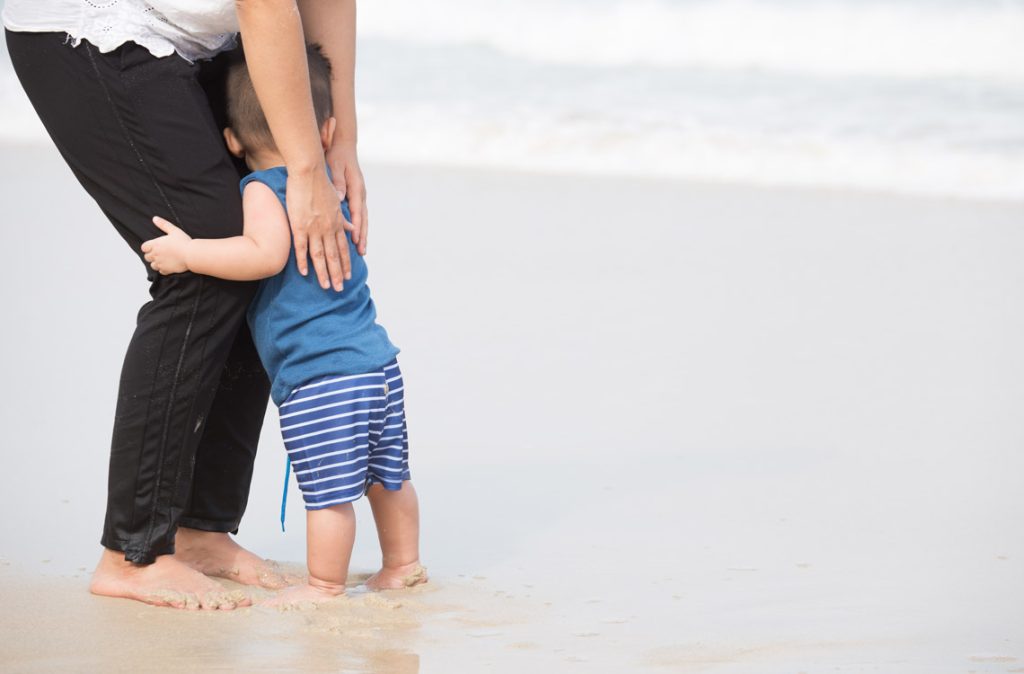
Do you feel like your child is becoming like a barnacle lately? They seem to cling to you at all hours of the day or stick to your side like a conjoined twin. If so, congratulations! You’ve just entered into the world’s oldest and most important parent-child relationship contract: attachment.
Don’t worry, it’s not a learning disability or a developmental delay. In fact, it’s a pretty common occurrence in all children
If you’ve never heard of the word before, ‘attachment’ is simply an emotional bond that helps children feel safe enough to explore the world, cry when they need help, and (one day) tolerate the harsh realities of life.
Here’s what you need to know about attachment and how you can navigate this very common childhood behaviour with your little one.
What Attachment Actually Means


In plain English: attachment is a child’s expectation that there will be someone to turn to when life gets scary, confusing or unpredictable.
Children are not born with attachment but rather develop it as they grow up. The process begins as early as 6 to 7 months and continues to solidify as they grow into toddlers.
How you deal with your child’s attachment while they’re young determines their unique attachment style later in life. In fact, you can tell a lot about how an adult was raised as a child by how they navigate their relationships.
Someone with a bad childhood will usually have chaotic or drama-filled relationships full of messy breakups and divorces. They may struggle with making and keeping friends.
This is where we get into the different types of attachment styles: secure, avoidant, ambivalent, and disorganised.
Secure Attachment
The “gold standard” of attachment styles. Carers are responsive, consistent, and emotionally available. Children grow into adults who are comfortable with closeness, able to trust, and have balanced independence and intimacy.
Avoidant Attachment
Carers are emotionally distant, dismissive, or discouraging of expressions of need. Children grow into adults who struggle with emotional closeness, value independence excessively, and avoid intimacy.
Anxious Attachment
Carers are inconsistent (sometimes nurturing, sometimes unavailable). Children grow into adults who seek high levels of reassurance and fear abandonment. They are clingy or overly sensitive in relationships.
Disorganised Attachment
Carers are frightening, abusive, or a source of fear and comfort at once. Children grow up into adults who have difficulty trusting and internal conflict between wanting closeness and fearing it. This attachment style causes a higher risk of unstable relationships
Why Attachment Matters

Short answer: attachment shapes how your child manages feelings, friendships and relationships in general.
Securely attached children, on average, show better emotion regulation, fewer behaviour problems and smoother social skills as they grow.
On the other hand, insecure attachments can create children who are neurotic, anxious and less likely to thrive later in life, especially when it comes to friendships and romantic relationships.
These aren’t just “nice-to-haves”; they’re predictors for how kids cope with stress and relate to others later on. Studies show important connections between early attachment and later emotional and social outcomes.
Basically, how your child develops their attachment style basically sticks with them till they’re adults.
So yes, even you now as an adult and a parent have your own attachment style that is a direct result of how your own parents raised you when you were little (for better or for worse).
The Science Under the Hood

Ever wondered how attachment actually works on a deeper level? You can thank oxytocin (the so-called “bonding hormone”) for this magical but complex process.
This hormone is what’s responsible for the physiological (and psychological) dance between parent and baby during cuddle time, feeding, and gentle eye contact.
Oxytocin helps tune both brains to one another, which supports synchrony and sensitive caregiving. But it’s not destiny. Genes, culture, sleep deprivation and finance all play a part.
Think of biology as the orchestra and parenting as the conductor: both are needed for a decent performance.
Building Healthy Childhood Attachment

Good news: building attachment doesn’t require perfect past lives or a PhD in developmental psychology.
It needs simple, repeatable habits.
- Be reliably there. Children don’t need flawless parenting; they need enough moments that feel predictable and calm. Responding to cries and bids for attention teaches them you’re a “safe base”.
- Use “serve and return”. When your child babbles, look, respond and extend the exchange. It’s conversational tennis for brain development.
- Repair, don’t panic. If you lose patience and snap, apologise, calm down, and reconnect. Repairs are as important as the initial connection; they teach children relationships can be mended.
- Play (and be a bit silly). Playfulness signals availability and builds trust in a low-stakes way.
- Skin-to-skin and routines. Simple physical closeness — even short — supports hormonal synchrony (hello, oxytocin). Routines provide the predictability that children’s nervous systems love.
Parental sensitivity is the key skill here to cultivate. Noticing subtle cues and responding appropriately is one of the strongest predictors of secure attachment.
Unfortunately for many children, attachment styles tend to run in families over multiple generations as part of generational trauma. So many parents tend to pass on their own insecure attachment styles to their kids, often unknowingly.
But not all hope is lost. Even if you didn’t grow up with a model to copy, there’s plenty of hope. Attachment also changes over time; it’s not a one-way ticket written in childhood.
With plenty of self-reflection, and perhaps some much-needed therapy, you can change your attachment style and pave a better future for the next generation.
Putting It into Practice

Attachment science is less about perfect rituals and more about patterns: reliable presence, sensitive responses, and the occasional daft dance move in the living room.
Your goal isn’t to be a saint; it’s to be a predictable, repairable human who your child can count on.
Small consistent acts add up to something profound: a child who knows, deep down, that they’re not alone. A second of eye contact, a quick calming cuddle, and an apology when you lose your temper – these all matter.
That’s how you build secure and healthy attachment that will guarantee a happy and thriving future for your little one many years down the line.
Disclaimer: The information provided in this article is for informational purposes only and should not be considered as medical advice from Motherhood.sg. For any health-related concerns, it is advisable to consult with a qualified healthcare professional or medical practitioner.
For more insightful stories and parenting advice, stay tuned to Motherhood.sg!