
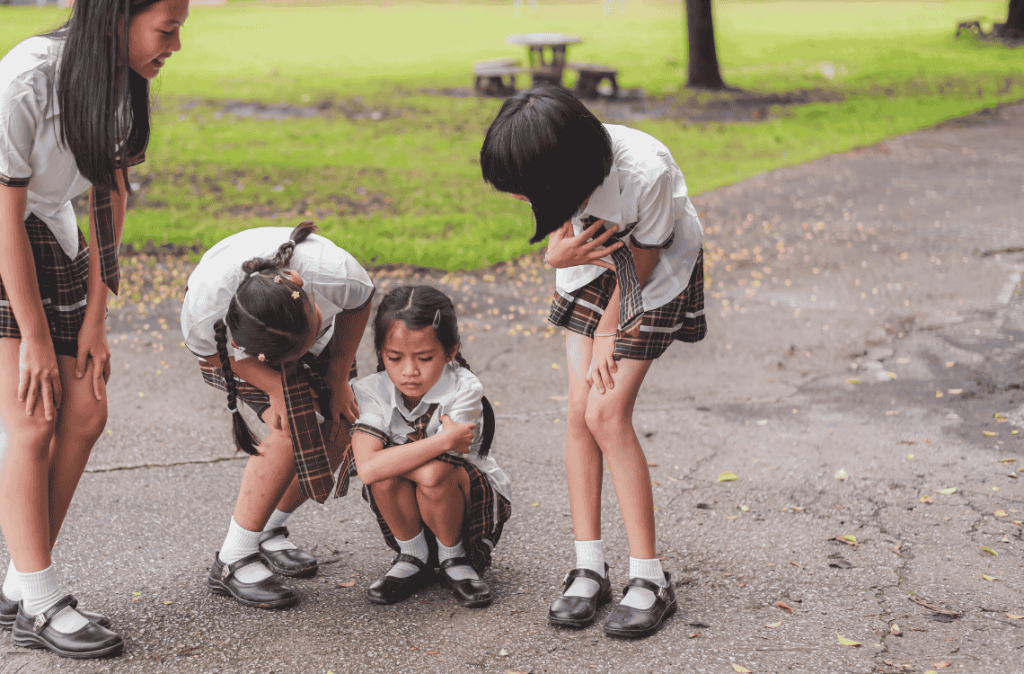
With bullying cases making headlines again in Singapore, it’s becoming harder to ignore how prevalent this issue is.
Recent updates from the Ministry of Education (MOE) show that schools are now taking a stricter stance, with clearer consequences for bullying, including detention, suspension, and even caning in more serious cases.
That alone says that bullying isn’t treated as “just kids being kids” anymore.
In Singapore, the environment our children are growing up in is also very different. It’s fast-paced, highly structured, and in many ways, more competitive from a younger age. Between academics, CCAs, social circles, and even online presence, there’s a constant pressure to keep up, fit in, and not fall behind.
And in that kind of environment, bullying doesn’t always come across as obvious aggression.
Sometimes it’s exclusion from group chats, subtle comparisons, being made to feel “less than” or pressure to go along with things just to stay included. It can look like normal social behaviour on the surface, but for a child on the receiving end, it builds over time.
What makes it harder is that many children don’t immediately see this as something wrong. They see it as something they have to manage.
And that’s where things often get missed.
What Parents Can Do Early (Before It Escalates)


- Don’t rely on them to tell you: Older kids, especially, tend to keep things in. Not because they don’t trust you, but because they’re unsure, embarrassed, or feel like they should handle it themselves. Silence doesn’t mean everything is fine.
- Stay close to their daily world: You don’t need to be overly involved, but you should have a sense of who they spend time with, what their social circles look like, and where they feel comfortable in school. Parent chats, school updates, and casual check-ins can give you more insight than you think.
- Make it easy for them to talk, even about small things: If every conversation turns into a correction or lecture, they’ll start filtering what they tell you. Keep the space open by listening first, even when it seems minor.
- Help them make sense of what they’re experiencing: Not all children know how to explain discomfort. Instead of asking direct questions, get them to talk through situations, what happened, how it felt, and what they did next.
- Teach boundaries clearly: They should know it’s okay to say no, to walk away, and to recognise when something doesn’t feel right.
- Stay aware of their digital space too: Not because you don’t trust them, but because a lot of what happens today plays out online. Group chats, social media, and even gaming platforms are where exclusion, teasing, or pressure can show up.
- Encourage confidence outside the classroom: Activities like martial arts, sports, or CCAs can help children feel more grounded. It’s not about fighting back, but about confidence, discipline, and how they carry themselves.
- Act earlier than you think you need to: If something feels off, trust it. A discreet check-in with a teacher or school counsellor early on is far more effective than waiting for something bigger to happen.
Signs You Shouldn’t Brush Off

Bullying doesn’t always come with clear signs, but here are some things to look out for:
- Reluctance or anxiety around going to school
- Suddenly going quiet about their day
- Mood shifts after school or online interactions
- Avoiding certain names or conversations
- Changes in appetite or sleep
- Losing or damaging belongings more often
- Pulling away from activities they used to enjoy

In Singapore, bullying often gets buried under everything else our kids are juggling: schoolwork, CCAs, social expectations, and trying to keep up in an environment where everyone seems to be doing something.
So when something feels off, it’s easy to explain it away.
“They’re just stressed about exams.”
“They’re tired from CCA.”
“It’s just friend drama.”
And sometimes, it is, but sometimes, it isn’t. In a system where kids are taught to cope, keep going, and not fall behind, it’s easy for these things to slip through.
Of course, no parent wants to overreact, but in today’s environment, waiting for something to become obvious can mean waiting too long.
So, parents… while we’re pushing them to do well, let’s make sure they’re actually okay and happy.
Disclaimer: The information provided in this article is for informational purposes only and should not be considered as medical advice from Motherhood.sg. For any health-related concerns, it is advisable to consult with a qualified healthcare professional or medical practitioner.
For more insightful stories and parenting advice, stay tuned to Motherhood.sg!