
Choosing a baby feeding bottle may seem simple, but with so many options available, it can quickly become overwhelming for new parents.
From milk flow and anti-colic features to comfort and ease of cleaning, there are several factors that can affect a baby’s feeding experience.
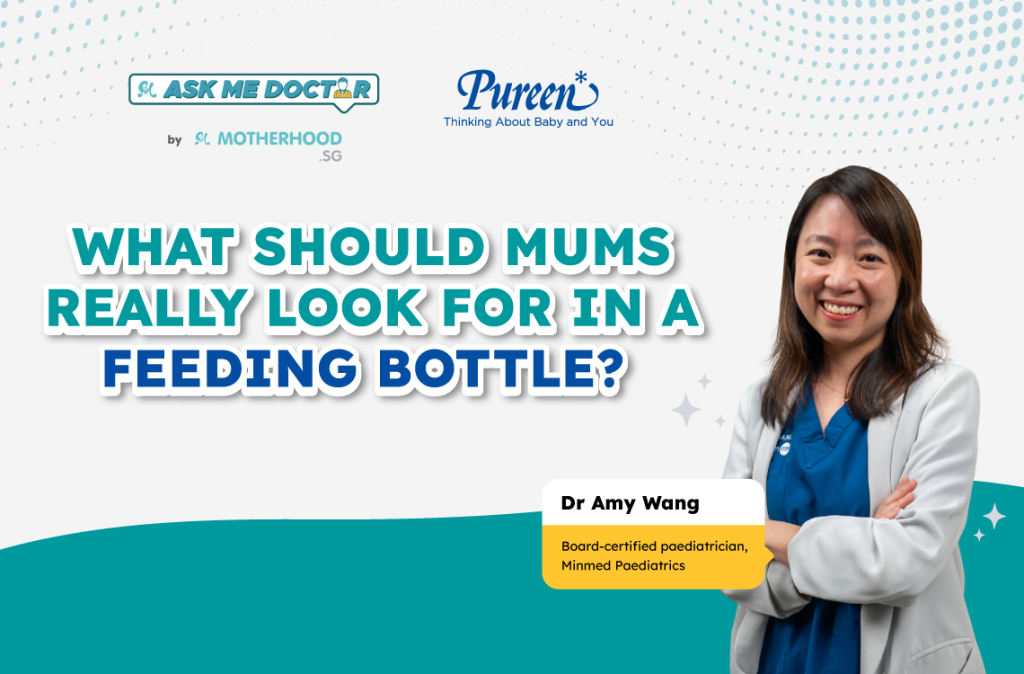
In this episode of AskMeDoctor! by Motherhood.sg, board-certified paediatrician Dr Amy Wang answers some of the most common questions parents have about choosing the right feeding bottle.


What should mothers look for in a feeding bottle beyond the price or design?
Dr Amy Wang: A feeding bottle is a rather personal choice. As a parent, you’d want to choose a bottle that fits into your lifestyle – whether it’s the material, how easy it is to clean and sterilise frequently, and whether you like how it looks and feels, as it’s something you’ll be using very frequently.
On the other hand, you’d also want to use a bottle that your child would actually like, and that’s unpredictable, so trial and error may sometimes be necessary. Choosing a bottle that fits your child’s feeding pace and reduces the amount of air your child ingests can help your child feel more comfortable.
Why is it important for a feeding bottle to support a baby’s natural sucking action?
Dr Amy Wang: As adults, we feel frustrated when we drink from a straw that is too thin or flat and doesn’t give us our drink as fast as we’d like. On the other hand, when the straw is too thick, it can feel overwhelming.
Similarly, a baby will also feel more comfortable drinking from a bottle and teat that suits their natural sucking rhythm.
Too slow a flow and the baby can become frustrated and even tired from drinking. Too fast a flow and the baby may struggle to keep up, which can lead to coughing or even choking. A bottle and teat that match the baby’s sucking and pausing rhythm help make feeding more comfortable.

How does swallowing too much air affect a baby during bottle feeding?
Dr Amy Wang: A baby’s stomach is only so small. Swallowing too much air causes bloating and discomfort.
When babies are uncomfortable, they cry and may swallow even more air. They may end up drinking less milk than they need because they’re already so full of air, making them fussier and hungrier more easily, creating a vicious cycle.
To reduce swallowed air, a vented bottle can help.
Parents can also pace the feeding by tilting the bottle intermittently to slow the flow according to the baby’s pace. Ensuring the teat remains filled with milk during feeding helps reduce air swallowing, while burping during and after feeds helps release trapped air.

What bottle features can help babies switch between direct feeding and bottle feeding?
Dr Amy Wang: Many working mothers go through this. A bottle that helps a child switch easily between the breast and bottle is important, although this may take some trial and error.
A bottle that mimics natural breastmilk flow and the breastfeeding experience can be helpful.
For example, if mummy’s breastmilk flow is naturally slower, choosing a bottle and teat with a slower flow rate can help prevent the baby from becoming frustrated when returning to breastfeeding.
Beyond bottle features, it’s also helpful to familiarise breastfed babies with a bottle once a day through another caregiver. This helps babies become more comfortable with the transition and makes things much less stressful when mum returns to work.
Does a good feeding bottle have to be expensive?
Dr Amy Wang: That depends on what “high quality” means to you. A bottle can be of good or even high quality, but if your child doesn’t like it, then it isn’t high quality for your family.
Personally, I chose what I thought was a premium-quality bottle for my firstborn, but after repeated attempts, she still refused it. I eventually had to try different bottles and teats until she was happy to bottle-feed again.
Bottle preferences are highly personal and can even change as your child grows.
A premium price doesn’t necessarily mean it’s the best choice for your baby. The best bottle is simply one that both your child and your family are comfortable and happy using.

Dr Amy Wang’s Final Advice for Parents Choosing a Feeding Bottle
When selecting a feeding bottle, Dr Amy recommends keeping these three points in mind:
- Choose a bottle that is vented, with a flow rate that suits your child.
- Choose a bottle that you’re happy with – whether it’s the material, how it’s cleaned, or how well it fits into your lifestyle.
- Choose a bottle that your baby is happy with, and be patient, as finding the right one may take some trial and error.
Motherhood.sg Recommends Pureen SoftFlex
Every baby is different, and there’s no single feeding bottle that’s perfect for every family.
Instead of focusing solely on price or appearance, consider how well a bottle supports your baby’s natural feeding rhythm, comfort, and everyday needs.

For mums and dads looking for a feeding bottle designed to support natural sucking action, minimise air intake, and provide a comfortable feeding experience, the Pureen SoftFlex range offers practical features that can help make feeding time smoother for both babies and parents.
You can find Pureen SoftFlex bottles at @kiddypalacesg, or shop anytime at the Pureen Singapore Official Store on Shopee, Lazada, and TikTok.
Disclaimer: The information provided in this article is for informational purposes only and should not be considered as medical advice from Motherhood. For any health-related concerns, it is advisable to consult with a qualified healthcare professional or medical practitioner.
For more insightful stories and parenting advice, stay tuned to Motherhood.sg!